
How Soon Should Physiotherapy Start After Surgery in Vaughan?

Published: November 2026 | Last Updated: November 2026
Written by: PhysioChiroWellness Clinical Team, Newmarket | Reviewed by: Branden McKnight, MSc Physiotherapy
You wake up from surgery; the procedure went well, and the surgeon tells you to rest. Then the questions start. Should you be moving already? When do you book your first rehab session? Can waiting too long slow your recovery?
Knowing when to begin rehabilitation can help you protect the surgical repair, regain mobility safely, and avoid unnecessary delays in your recovery.
The short answer is that rehabilitation often begins within the first few days after surgery, sometimes while you are still in hospital. However, this does not mean every patient should start formal outpatient physiotherapy immediately. The appropriate timing depends on the operation, the tissues involved, your surgeon’s instructions, and your stage of healing.
This guide explains what early rehabilitation involves, how timelines differ between common surgical procedures, what to expect at your first physiotherapy appointment, and how to approach recovery safely with guidance from the PhysioChiroWellness clinical team in Vaughan.
Key Takeaways: In a Nutshell
- Rehabilitation can begin within hours or days of surgery, often with supervised walking, breathing exercises, or gentle movements in hospital.
- Formal outpatient physiotherapy may begin within the first few weeks, depending on the procedure, tissue healing, and your surgeon’s rehabilitation protocol.
- Early rehabilitation does not always involve moving the operated joint. Some procedures require temporary immobilization or restricted movement to protect the repair.
- Recovery progresses through different stages, from swelling management and safe mobility to strengthening, balance, and everyday functional activities.
- Your age, general health, pre-surgery fitness, surgical complexity, and ability to follow your home exercise program can influence recovery.
- In Ontario, you can generally access physiotherapy without a physician referral, although insurance and publicly funded programs may have additional documentation requirements.
- Fever, spreading wound redness, unusual discharge, a painful swollen calf, chest pain, or sudden shortness of breath should never be treated as ordinary rehabilitation discomfort. Seek appropriate medical attention.
Why Timing Matters After Surgery
Surgery addresses an underlying problem, but recovery brings its own challenges. The tissues involved need time to heal, muscles around the operated area may become weaker, and pain or swelling can make everyday movement difficult.
When movement is unnecessarily restricted for too long, patients may experience joint stiffness, muscle weakness, reduced physical endurance, and difficulty returning to normal activities. Prolonged inactivity can also contribute to other complications, including reduced circulation and an increased risk of blood clots in some patients.
However, movement must be appropriate for the operation. Some procedures require temporary immobilization or restrictions on joint movement and weight-bearing to protect repaired tendons, ligaments, bones, or other tissues. Trying to progress too quickly can place unnecessary stress on the surgical site and interfere with healing.
The purpose of post-surgical physiotherapy is to find the appropriate balance between protecting healing tissues and gradually restoring movement and function. Your physiotherapist considers the procedure, the surgeon’s instructions, your symptoms, and your response to rehabilitation when deciding how to progress your exercises.
An individualized rehabilitation plan also helps you understand which movements are appropriate, which activities should be avoided temporarily, and when it may be safe to increase your activity.
Early Mobilization vs. Outpatient Physiotherapy: What Is the Difference?
Both early mobilization and outpatient physiotherapy are related parts of post-surgical recovery, but they do not necessarily begin at the same time or involve the same activities.
Early mobilization refers to getting the body moving safely soon after surgery. Depending on the procedure, this may involve sitting up, standing, walking with assistance, practising breathing exercises, or moving joints that are not affected by the operation. These activities may begin in hospital under the guidance of a physiotherapist or nursing team.
Outpatient physiotherapy involves more structured rehabilitation after discharge. A physiotherapist assesses your movement, strength, swelling, balance, and ability to perform everyday activities. Treatment is then planned around your surgical procedure, healing progress, and the restrictions provided by your surgeon.
For example, someone recovering from a knee replacement may begin supervised walking in hospital and continue with exercises to restore knee movement and leg strength during outpatient rehabilitation. Someone recovering from rotator cuff repair may also begin rehabilitation early, but their initial program may focus on protecting the repaired tendon and performing only approved movements.
The important distinction is that starting rehabilitation early does not mean every patient should immediately exercise the operated area. The type and intensity of movement must follow the requirements of the procedure.
How Soon Should You Start Physiotherapy After Surgery?
There is no universal start date for post-surgical physiotherapy. The appropriate timing depends on the operation, the tissues that need to heal, your general health, and the rehabilitation protocol provided by your surgeon.
For many patients, supervised movement begins within the first 24 to 72 hours after surgery. Formal outpatient physiotherapy may begin during the first few weeks, although some procedures require a longer period of protection before certain movements or exercises can be introduced.
The following stages provide a general overview of what rehabilitation may involve. They are not fixed deadlines. Your surgeon’s instructions and your physiotherapist’s assessment should determine when each stage is appropriate.
The First 24 to 72 Hours
For many patients, the first stage of rehabilitation begins in hospital. Depending on the operation and medical condition, a physiotherapist or nurse may help you sit up, stand, transfer from your bed to a chair, and take your first steps with an appropriate walking aid.
After procedures such as knee or hip replacement, early supervised walking is commonly encouraged when the patient is medically stable. It helps restore basic mobility and forms part of a broader approach to reducing complications associated with prolonged inactivity.
The exercises introduced during this period depend on the surgery. Some patients may be encouraged to move their ankles, tighten their thigh muscles, or practise gentle breathing exercises. Others may need to protect the operated area and avoid certain movements until the surgeon gives further instructions.
Breathing exercises and supported coughing may also be recommended after abdominal or chest surgery, particularly when pain or reduced activity makes deep breathing difficult.
Before leaving hospital, make sure you understand your movement restrictions, weight-bearing instructions, and any requirements for using a sling, brace, boot, or walking aid. Ask when you should arrange your first outpatient physiotherapy assessment and who to contact if you experience unexpected symptoms.
The goal during these first days is to establish safe movement and understand how to protect the surgical area while recovery begins.
Weeks One to Six
The first six weeks are an important period of recovery, although the rehabilitation activities can differ considerably between procedures.
For patients recovering from joint replacement, early outpatient physiotherapy may focus on improving joint movement, reducing swelling, activating the surrounding muscles, and becoming more independent with walking and everyday activities.
Following ligament reconstruction or fracture surgery, the initial program may involve carefully controlled exercises, maintaining movement in unaffected joints, and following specific weight-bearing or movement restrictions. Patients recovering from tendon repairs may need a longer period of protection before active movement and strengthening can progress.
During this stage, your physiotherapist monitors how you respond to treatment. Changes in swelling, pain, mobility, muscle activation, and walking ability can help determine whether your program should progress or be adjusted.
At PhysioChiroWellness, our clinical team uses the initial assessment to understand what you can safely do, what movements need protection, and which activities should become rehabilitation priorities. We also explain how to manage your exercises between appointments so that you have clear guidance at home.
The purpose is to build a suitable foundation for the next stage of recovery without placing unnecessary stress on healing tissues.
Beyond Six Weeks
As healing progresses and restrictions are lifted, rehabilitation can gradually place greater emphasis on strength, balance, endurance, coordination, and functional movement.
The exercises introduced during this stage depend on the operation and the patient’s progress. Someone recovering from knee replacement may work on stair climbing, walking endurance, and greater independence with daily activities. An athlete recovering from ACL reconstruction may progress to running preparation, jumping, landing, and sport-specific movement once the required clinical and functional criteria have been met.
Your physiotherapist may assess joint movement, muscle strength, balance, movement quality, and confidence when deciding whether to introduce more demanding activities.
Recovery does not automatically become complete after six weeks. Some patients continue rehabilitation for several months, particularly after complex repairs, ligament reconstruction, or operations requiring a gradual return to physically demanding work or sport.
The aim is to restore the abilities you need for everyday life and the activities you want to return to, while respecting the healing requirements of the procedure.
When Does Physiotherapy Start After Different Types of Surgery?
The timing and structure of rehabilitation depend heavily on the operation performed. A patient recovering from a knee replacement may begin walking shortly after surgery, while someone who has undergone a tendon repair may need to protect the repaired tissue before progressing to active movement.
The following examples explain the general rehabilitation priorities associated with common procedures. They are educational guides rather than fixed treatment schedules. Your surgeon’s instructions, the details of the operation, and your physiotherapist’s assessment determine which exercises and activities are appropriate.
| Procedure | Early rehabilitation priorities | Important consideration |
| Knee replacement | Walking, knee movement, thigh muscle activation | Swelling and movement tolerance |
| Hip replacement | Walking, transfers, safe daily activities | Procedure-specific precautions |
| ACL reconstruction | Swelling control, knee extension, quadriceps activation | Graft protection and functional progression |
| Rotator cuff repair | Protection, approved passive movement, elbow and wrist movement | Tear size and repair protocol |
| Spinal surgery | Walking, safe transfers, gradual activity | Procedure-specific lifting and movement restrictions |
| Fracture fixation | Swelling management, safe mobility, movement of permitted joints | Weight-bearing clearance |
| Abdominal surgery | Walking, breathing, safe transfers | Incision protection and lifting restrictions |
Knee and Hip Replacement
After total knee or hip replacement, many patients begin supervised standing and walking within the first day of surgery, provided they are medically stable and cleared to mobilize.
Following knee replacement, early rehabilitation commonly focuses on gradually restoring knee bending and straightening, activating the quadriceps muscles, managing swelling, and improving walking ability. Patients may initially use a walker or another mobility aid while strength, balance, and confidence improve.
After hip replacement, rehabilitation focuses on safe transfers, walking, hip and leg strength, and gradually returning to everyday activities. Some patients receive movement precautions depending on the surgical approach and individual circumstances. These instructions may affect how they sit, bend, dress, and get in and out of a vehicle.
The first outpatient physiotherapy appointment is used to assess mobility, swelling, walking, strength, and functional limitations. Progression depends on the patient’s recovery, medical status, and any restrictions provided by the surgeon.
ACL Reconstruction and Other Knee Ligament Surgery
Rehabilitation after anterior cruciate ligament (ACL) reconstruction begins early, but it progresses through several carefully managed stages.
Initial priorities commonly include controlling swelling, restoring knee extension, improving quadriceps activation, and gradually recovering knee movement. The physiotherapist also considers the type of graft used and whether additional procedures, such as meniscus repair, were performed.
As recovery progresses, rehabilitation may introduce progressive strengthening, balance exercises, movement control, running preparation, and eventually jumping, landing, and sport-specific drills.
Returning to pivoting sports such as soccer, basketball, or volleyball requires more than waiting a certain number of months. Physiotherapists and surgeons consider factors such as knee stability, strength, movement quality, swelling, functional testing, and psychological readiness.
The Aspetar clinical practice guideline for ACL reconstruction emphasizes individual progression criteria and adequate graft protection rather than relying on time alone. This is why return-to-sport decisions should be based on clinical assessment and functional readiness.
Pre-surgery physiotherapy may also be useful. It can help patients work on knee mobility, quadriceps activation, strength, and understanding the rehabilitation process before the operation.
Rotator Cuff and Shoulder Surgery
Recovery after rotator cuff repair requires particular attention to protecting the repaired tendon.
Many patients use a sling during the initial recovery period. Depending on the size of the tear, tissue quality, surgical technique, and surgeon’s protocol, rehabilitation may begin with approved passive shoulder movement while active shoulder movement and strengthening remain restricted.
Patients may also receive guidance on elbow, wrist, and hand movement, sleeping positions, dressing, and safely managing everyday activities while wearing a sling.
As healing progresses and the surgeon permits, rehabilitation can gradually introduce active movement, followed by strengthening exercises. The timing of these stages varies between patients and should not be determined by a general online timeline.
The American Academy of Orthopaedic Surgeons’ 2025 rotator cuff guideline discusses evidence comparing early and delayed mobilization following certain arthroscopic repairs. Its recommendations also make clear that the evidence applies to particular patient groups and should not be treated as a universal protocol.
Spinal Surgery
Physiotherapy after spinal surgery depends on the procedure performed and the structures involved.
Following some procedures, such as lumbar decompression or discectomy, patients are encouraged to begin walking as soon as they are medically stable. Early rehabilitation may focus on safe transfers, walking, maintaining general mobility, and understanding any temporary activity restrictions.
Patients who have undergone spinal fusion may require a different progression because the operation involves additional healing considerations. Restrictions on lifting, bending, twisting, or other activities may apply depending on the procedure and surgeon’s instructions.
As recovery progresses, physiotherapy may introduce exercises for trunk and hip strength, movement control, walking endurance, and daily activities. The aim is to restore function gradually without exceeding the restrictions associated with the surgery.
Foot, Ankle, and Fracture Surgery
After fracture fixation, ankle ligament repair, or other foot and ankle procedures, patients may need to wear a cast, boot, or protective brace.
Some are instructed to avoid putting weight through the operated limb for a period, while others may be allowed partial or full weight-bearing with appropriate support. The decision depends on the injury, fixation, surgical findings, and surgeon’s instructions.
During the protective phase, physiotherapy may focus on swelling management, safe movement of unaffected joints, maintaining general mobility, and learning to use crutches or other walking aids correctly.
Once weight-bearing and ankle movement restrictions are lifted, rehabilitation can gradually introduce ankle mobility exercises, calf and foot strengthening, balance training, and walking progression.
Restoring balance and the body’s ability to respond to changes in surface and movement is particularly important after some ankle injuries. Branden McKnight’s clinical interest in ankle and balance rehabilitation informs the team’s approach to this stage of recovery.
Abdominal and Soft Tissue Surgery
After procedures such as hernia repair, gynecological surgery, or other abdominal operations, early rehabilitation often focuses on gentle walking, breathing exercises, safe transfers, and returning gradually to everyday activities.
Patients may receive guidance on getting out of bed without placing unnecessary strain on the abdominal area, managing discomfort during movement, and following temporary lifting restrictions.
Depending on the operation and individual symptoms, later rehabilitation may include graded strengthening, core exercises, or pelvic floor rehabilitation when clinically appropriate.
The timing of these activities depends on the surgical procedure, wound healing, symptoms, and instructions from the treating medical team.
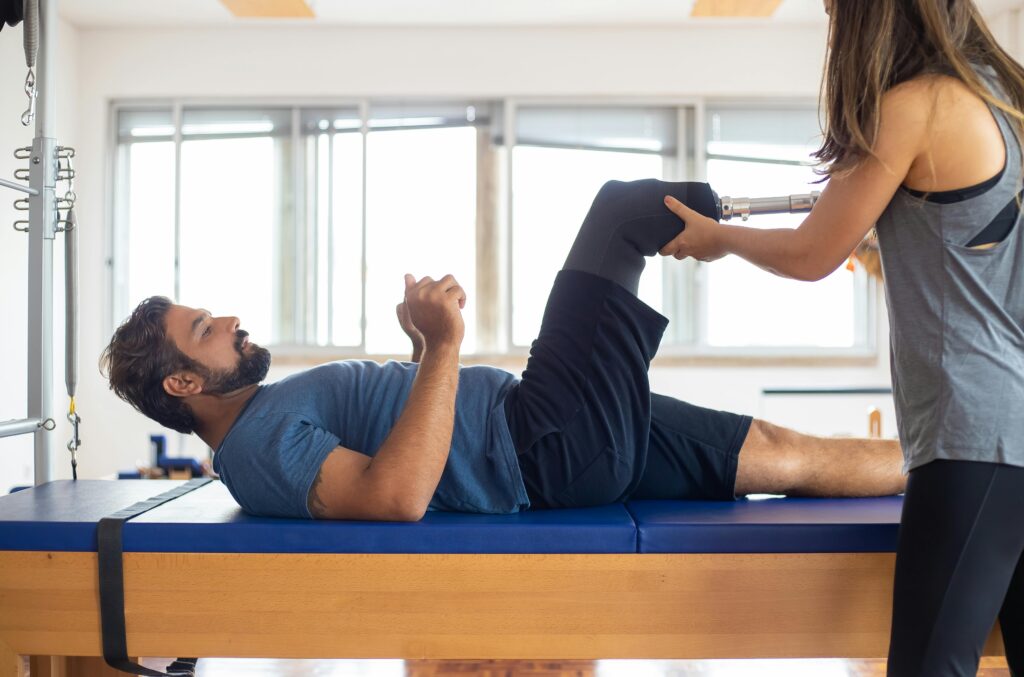
What to Expect at Your First Post-Surgery Physiotherapy Appointment
A first appointment after surgery is more conversation and gentle assessment than hard work. Here is what you can usually expect at our Vaughan clinic.
Your physiotherapist begins by reviewing your surgical report, discharge notes, medications, and any precautions from your surgeon. Next comes a discussion of your goals. Someone returning to a desk job in Woodbridge needs a different plan than a Concord tradesperson who lifts all day or a Thornhill parent chasing toddlers.
What Should You Bring to Your First Appointment?
Preparing a few documents and details can help your physiotherapist understand your recovery and develop an appropriate rehabilitation plan.
If available, bring:
- Your surgical discharge instructions and postoperative report.
- Any rehabilitation protocol or movement restrictions provided by your surgeon.
- A list of medications you are currently taking.
- Relevant imaging or investigation reports.
- Your sling, brace, boot, or walking aid, if you have been instructed to use one.
- Details of your current symptoms, including swelling, pain, and activities you find difficult.
- Insurance information if you intend to use extended health benefits.
You do not need to delay an appointment simply because you cannot obtain every document. Your physiotherapist can help identify any additional information needed from your surgeon.
The assessment covers pain, swelling, scar condition, range of motion, strength where it is safe to test, balance, and how you move through everyday tasks. Then comes treatment. Depending on your stage, that may include education, supervised exercise, gentle manual therapy, swelling management, gait training, and a home program you can follow on your own.
You should leave with a clear sense of what to do, what to avoid, and what milestones to expect over the next few weeks.
Your initial rehabilitation plan should also identify the exercises you can safely perform at home, how frequently to complete them, and which symptoms should prompt you to contact your healthcare team. If any part of your surgeon’s instructions is unclear, your physiotherapist may need to clarify the restrictions with the treating medical team before progressing treatment.
Who Can Benefit From Physiotherapy After Surgery?
Post-surgical physiotherapy can support people recovering from many different types of operations. The specific treatment depends on the procedure, medical condition, and recovery goals.
You may benefit from a structured rehabilitation program if you are:
- Recovering from joint replacement: You need to regain joint movement, leg strength, walking ability, and independence with daily activities.
- Recovering from ligament or tendon repair: You need a gradual progression of movement and strengthening that protects the repaired tissue.
- Recovering from a fracture: You need help managing swelling, restoring movement, and rebuilding strength once weight-bearing restrictions are lifted.
- Recovering from spinal surgery: You need guidance on safe mobility, activity modification, and gradually restoring physical function.
- An older adult recovering from surgery: You want to maintain independence, improve balance, and reduce difficulties with everyday movement.
- An athlete or active adult: You want a structured approach to returning to exercise, training, and sport.
- Returning to work: You need to rebuild the strength, endurance, and functional abilities required for your job.
- Unsure about safe movement: You want professional guidance on what activities are appropriate during your recovery.
The need for physiotherapy and the type of rehabilitation required should be determined by your procedure, clinical assessment, and medical instructions.
Factors That Can Change Your Recovery Timeline
Two people can undergo the same operation and still experience different recovery timelines. Several factors influence how quickly someone can progress through rehabilitation.
Your physical condition before surgery
Your strength, mobility, balance, and general fitness can influence how easily you manage movement after an operation. Prehabilitation may help some patients improve their physical starting point before surgery.
Other health conditions
Conditions such as diabetes, cardiovascular disease, and circulation problems may affect healing, exercise tolerance, or the way rehabilitation needs to be monitored. Your physiotherapist should consider relevant medical conditions when planning treatment.
Smoking and general health habits
Smoking can interfere with normal tissue healing. Sleep, nutrition, and general health also influence your ability to participate in rehabilitation and recover from physical demands.
The complexity of the operation
A straightforward procedure may allow a different progression from a complex repair, revision surgery, or an operation involving multiple structures. The condition of the tissues and the surgeon’s findings can influence rehabilitation restrictions.
Pain and swelling
Pain and swelling can affect movement, muscle activation, sleep, and participation in exercise. Your physiotherapist considers how symptoms respond to activity when adjusting the program.
Your home environment
Stairs, bathroom access, available support, and the equipment you have at home can influence how independently you manage after discharge. Rehabilitation may need to address these practical challenges.
Consistency with your rehabilitation program
Completing prescribed exercises between appointments helps reinforce the work done during supervised sessions. However, consistency does not mean pushing through exercises that cause unexpected or worsening symptoms.
Because these factors vary between individuals, rehabilitation should be reviewed and adjusted as recovery progresses. If symptoms increase or progress stalls, your physiotherapist may modify the program and communicate with your surgeon when necessary.
How Do You Know If Your Post-Surgery Rehabilitation Is Progressing?
Pain is only one part of recovery. A patient may still experience some discomfort while making improvements in mobility, strength, and everyday function.
Physiotherapists consider several factors when assessing whether rehabilitation is progressing appropriately.
Improved movement
Depending on the procedure, progress may include better joint movement, improved flexibility, or greater ease performing everyday movements.
Changes in swelling and discomfort
Your physiotherapist monitors swelling and pain in relation to your activity level. Symptoms should be interpreted in the context of the operation and expected healing process.
Improved muscle strength and activation
After surgery, muscles around the operated area may become weaker or harder to activate. Gradually improving strength and muscle control can support walking, lifting, balance, and other functional activities.
Greater independence with daily activities
Being able to get out of bed, climb stairs, walk longer distances, dress independently, or perform work-related tasks may indicate improvements in function.
Better balance and movement control
Depending on your operation, rehabilitation may include assessing how well you control the operated limb during standing, walking, and more demanding movements.
Readiness for more demanding activities
Returning to running, heavy physical work, or sport requires more than feeling less pain. Your physiotherapist may use strength assessments, functional tests, movement analysis, and other procedure-specific measures to determine whether progression is appropriate.
Recovery is not always a steady upward process. Temporary changes in symptoms can occur, but worsening pain, significant new swelling, or unexpected symptoms should be discussed with your healthcare team.
Your physiotherapist should explain which milestones are relevant to your operation and how they will be assessed throughout your rehabilitation.
How Often Should You Attend Physiotherapy After Surgery?
The frequency of post-surgical physiotherapy depends on the operation, your rehabilitation stage, medical restrictions, and how independently you can complete your exercises.
Some patients benefit from more frequent supervised appointments during the early stages of recovery, particularly when they need assistance with mobility, swelling management, or learning how to perform exercises safely.
As strength, movement, and confidence improve, appointments may become less frequent while the patient continues progressing through a structured home exercise program.
Your physiotherapist may consider the following when recommending appointment frequency:
- The type and complexity of your surgery.
- Your surgeon’s rehabilitation protocol.
- Your current movement, strength, and functional ability.
- Whether you need assistance with exercises or daily activities.
- How your symptoms respond between appointments.
- Your ability to follow the prescribed home program.
There is no single appointment schedule that works for everyone. Your physiotherapist should explain why a particular frequency is recommended and review it as your recovery progresses.
The aim is to provide the supervision you need while helping you become increasingly independent with your rehabilitation.
When Should You See a Physiotherapist After Surgery?
You should discuss the timing of outpatient physiotherapy with your surgeon or discharge team before leaving hospital. Once you understand your movement restrictions and rehabilitation instructions, you can contact a physiotherapy clinic to arrange an appropriate assessment.
It may be worth contacting a physiotherapist if:
- You have been discharged and are unsure which exercises or movements are safe.
- You need help following your surgeon’s rehabilitation instructions.
- You are experiencing difficulties with walking, balance, or everyday activities.
- You want guidance on managing swelling and regaining movement.
- You are preparing to return to work and need to rebuild strength or endurance.
- You are an athlete who needs a structured return-to-training program.
- You are scheduled for surgery and want to discuss prehabilitation.
You do not need to wait until all discomfort disappears before asking about rehabilitation. However, the exercises and treatment introduced during your appointment must be appropriate for your operation and stage of healing.
In Ontario, physiotherapists can assess and treat patients without a physician referral outside hospital settings. The College of Physiotherapists of Ontario regulates the profession and maintains a public register where patients can check a physiotherapist’s registration.
Your surgeon remains an important part of the rehabilitation process, particularly when decisions involve weight-bearing, movement restrictions, or progression following a surgical repair.
Warning Signs After Surgery: When to Seek Medical Attention
Physiotherapy is not a substitute for medical assessment when unexpected or potentially serious symptoms develop. Some symptoms after surgery require prompt attention, even if you have already started rehabilitation.
Contact your surgeon or healthcare provider promptly if you notice:
- Fever or chills accompanied by worsening symptoms.
- Increasing redness, warmth, or discharge around the surgical incision.
- Pain that is becoming significantly worse rather than gradually improving.
- New or worsening swelling around the operated area.
- Unexpected changes in wound appearance or healing.
Seek urgent medical assessment if you notice:
- Pain, warmth, redness, or swelling in one calf or leg, which may indicate deep vein thrombosis (DVT).
Call 911 immediately if you experience:
- Sudden shortness of breath.
- Chest pain, particularly when accompanied by difficulty breathing.
- Fainting or other symptoms suggesting a serious medical emergency.
After spinal surgery, new or worsening leg weakness, significant numbness, or loss of bladder or bowel control also requires immediate medical assessment.
Do not wait for your next physiotherapy appointment if you develop any of these warning signs. Contact the appropriate medical service and follow their instructions before continuing rehabilitation.
Clinical Insights: What Patients Often Overlook During Post-Surgical Recovery
Post-surgical rehabilitation involves more than completing a set of exercises during physiotherapy appointments. Much of recovery takes place at home, where patients gradually return to everyday activities and learn how to manage their movement safely.
Based on our clinical team’s experience treating patients recovering from surgery, there are several areas that deserve particular attention.
1. Understanding what is safe to move can reduce unnecessary fear
Some patients are understandably worried that movement will damage the surgical repair. This can make them hesitant to walk, perform approved exercises, or use the operated area during everyday activities.
The solution is to explain the surgeon’s restrictions clearly and distinguish between movements that are permitted and those that should be avoided temporarily.
For example, a patient recovering from rotator cuff repair may need to protect the shoulder from active movement while still performing approved elbow, wrist, and hand exercises. Understanding this distinction can make the early recovery period less confusing.
2. Everyday activities are part of rehabilitation
Patients often focus on the exercises they perform during their physiotherapy appointments and overlook the demands of daily activities.
Getting out of bed, climbing stairs, dressing, sitting down, and preparing meals all involve movement that may need to be modified temporarily after surgery.
We pay attention to these activities because patients need to manage them safely outside the clinic. Learning the appropriate techniques can help them become more independent while respecting their movement restrictions.
3. Progress should be assessed rather than assumed
Recovery does not always follow a perfectly predictable pattern. A patient may improve in walking ability while still experiencing swelling or difficulty with a particular movement.
This is why rehabilitation should be reviewed using more than pain levels or the number of weeks since surgery. Movement, strength, balance, swelling, and functional ability all provide useful information.
When symptoms change or progress slows, the rehabilitation plan may need to be adjusted rather than simply increasing exercise intensity.
4. Communication between healthcare professionals matters
Post-surgical rehabilitation often involves several healthcare professionals, including the surgeon, physiotherapist, family doctor, and other members of the medical team.
Clear communication helps ensure that movement restrictions, changes in symptoms, and rehabilitation goals are understood by everyone involved.
When a patient has questions about a surgical restriction or experiences unexpected symptoms, the physiotherapist may need to communicate with the surgeon before changing the rehabilitation plan.
At PhysioChiroWellness, we consider this coordination an important part of providing appropriate post-surgical rehabilitation.
Clinical perspective from Branden McKnight
Branden McKnight, MSc Physiotherapy, reviews our post-surgical rehabilitation content and brings experience in post-surgical, workplace, and motor vehicle accident rehabilitation. His particular interest in ankle and balance recovery also informs the team’s approach to restoring movement control and functional confidence.
His clinical perspective reinforces an important point: rehabilitation should be guided by the requirements of the operation and the patient’s functional progress, rather than by a fixed timetable alone.
Paying for Post-Surgical Physiotherapy in Ontario: OHIP and Insurance Options
The cost of rehabilitation is an important consideration after surgery. Depending on your circumstances, you may be able to access government-funded physiotherapy, use private health insurance, or pay for treatment directly.
Government-funded physiotherapy in Ontario
Ontario provides government-funded physiotherapy through designated Community Physiotherapy Clinics for eligible residents.
With a valid Ontario health card, eligibility includes:
- Adults aged 65 and older.
- Children and young people aged 19 and younger.
- People of any age who have been discharged after an overnight hospital stay or have undergone outpatient/day surgery within the previous 12 months for a condition requiring physiotherapy.
- Eligible recipients of Ontario Works or the Ontario Disability Support Program.
Eligibility requirements and available services depend on the applicable program. Not every private physiotherapy clinic participates in the government-funded program.
You can check the Ontario government’s guide to government-funded physiotherapy to review eligibility and find participating clinics.
Private health insurance
Many employees and individuals have extended health benefits that cover some or all of their physiotherapy expenses.
Coverage varies between insurance providers and plans. Before beginning treatment, check:
- Your annual physiotherapy coverage limit.
- Whether a physician’s note or referral is required by your insurer.
- Whether you need to use a registered physiotherapist.
- Whether your plan requires receipts or direct billing.
- Whether there are limits on the amount covered per appointment.
Workplace injuries and motor vehicle accidents
If your surgery relates to a workplace injury or motor vehicle accident, different insurance arrangements may apply.
Workplace injury claims may involve the Workplace Safety and Insurance Board (WSIB), while motor vehicle accident rehabilitation may involve your automobile insurer and the applicable accident benefits process.
Ask your insurer or claims representative what approvals and documentation are required before starting treatment.
If you are unsure about your options, the PhysioChiroWellness team can explain the clinic’s available payment and documentation arrangements.
Common Mistakes to Avoid During Post-Surgical Rehabilitation
Recovery requires patience and consistency. Certain mistakes can make rehabilitation more difficult or create unnecessary setbacks.
1. Waiting until all pain disappears before moving
Some discomfort may remain during recovery. If your surgeon has approved movement, follow the prescribed rehabilitation plan rather than waiting for every symptom to disappear. However, new or worsening pain should be assessed.
2. Doing too much on a good day
Feeling better does not always mean the operated tissues are ready for more demanding activity. Increasing exercise intensity or daily activity too quickly may lead to increased symptoms or unnecessary strain.
3. Ignoring movement restrictions
Weight-bearing limits, sling instructions, and restrictions on joint movement are intended to protect the healing area. Do not change them without guidance from your surgeon or treating medical team.
4. Skipping prescribed home exercises
Physiotherapy appointments provide supervision and guidance, but much of rehabilitation takes place between visits. Completing your prescribed home program helps maintain consistency and supports gradual progress.
5. Returning to work or sport too quickly
Feeling less pain does not automatically mean that you have regained the strength, endurance, balance, or movement control needed for demanding activities. Return-to-work and return-to-sport decisions should consider functional readiness and medical restrictions.
6. Neglecting sleep, nutrition, and general health
Recovery places physical demands on the body. Adequate nutrition, sleep, and following your medical team’s advice can support your ability to participate in rehabilitation.
7. Not asking questions when instructions are unclear
If you do not understand an exercise, movement restriction, or activity recommendation, ask your physiotherapist or surgeon to explain it. Guessing can lead to unnecessary worry or inappropriate activity.
Frequently Asked Questions About Physiotherapy After Surgery
How soon after surgery should I start physiotherapy?
The appropriate time depends on the procedure and your surgeon’s rehabilitation protocol. Many patients begin supervised movement within the first few days after surgery, sometimes while still in hospital. Outpatient physiotherapy may begin during the first few weeks, although some procedures require a longer period of protection before certain exercises can be introduced.
Can I start physiotherapy too early after surgery?
Yes. Starting exercises or movements before they are permitted can place unnecessary stress on healing tissues. However, delaying all movement when it is medically appropriate may also create problems. Your physiotherapist should follow your surgeon’s instructions and introduce exercises according to the requirements of your operation.
Can physiotherapy damage my surgical repair?
Appropriately prescribed physiotherapy is intended to support recovery while protecting the surgical repair. However, exercises that exceed your movement or weight-bearing restrictions may place unnecessary stress on healing tissues. This is why your rehabilitation program should be specific to your procedure and stage of recovery.
What happens if I cannot attend physiotherapy immediately after discharge?
If you cannot arrange an appointment immediately, contact your surgeon or discharge team to confirm what you should do at home and when outpatient rehabilitation should begin. Continue only the activities and exercises that have been approved for your procedure. If you are unsure about a movement restriction, seek clarification before attempting it.
Should I continue exercising if my operated area becomes swollen?
Some swelling may occur during recovery, but its significance depends on the procedure, stage of healing, and response to activity. If swelling increases unexpectedly, becomes significantly painful, or is accompanied by other concerning symptoms, contact your healthcare provider. Do not increase exercise intensity simply to push through the swelling.
How many physiotherapy sessions will I need after surgery?
The number of sessions varies according to the operation, your health, rehabilitation goals, and progress. Some patients need a smaller number of appointments to learn their exercises and receive guidance, while others require regular supervised rehabilitation over several months. Your physiotherapist can discuss an appropriate treatment plan after assessing your needs.
How often should I attend physiotherapy after surgery?
Appointment frequency depends on your procedure, recovery stage, symptoms, and ability to complete your exercises independently. Some patients need closer supervision early in recovery, while others may attend less frequently as they become more confident with their home program. Your physiotherapist should review the schedule as your function improves.
Do I need a doctor’s referral for physiotherapy in Vaughan?
No. In Ontario, you can generally book directly with a registered physiotherapist without a physician referral when receiving care outside a hospital. However, some insurance providers and funding programs may require additional documentation. Check your policy or program requirements before your appointment.
Is OHIP coverage available for physiotherapy after surgery?
Yes, eligible Ontario residents may receive government-funded physiotherapy through designated Community Physiotherapy Clinics. Eligibility includes certain age groups, eligible social assistance recipients, and people of any age who have had an overnight hospital stay or outpatient/day surgery within the previous 12 months for a condition requiring physiotherapy. A valid Ontario health card and applicable program requirements must be met. Not every private clinic participates in the program.
Can I see a physiotherapist before my surgery?
Yes. Prehabilitation involves preparing for an upcoming operation through appropriate exercises, education, and movement training. Depending on your procedure and physical condition, it may help improve strength, mobility, and familiarity with the rehabilitation process. Your surgeon and physiotherapist can advise whether it is appropriate for you.
When can I return to work or sport after surgery?
This depends on the operation, your recovery, and the physical demands of your activities. Returning to desk work may involve different requirements from returning to a physically demanding job. Athletes may also need to demonstrate adequate strength, balance, movement control, and psychological readiness before returning to sport. Your healthcare team should help determine when it is appropriate.
What areas near Vaughan does PhysioChiroWellness serve?
PhysioChiroWellness welcomes patients from Vaughan and surrounding communities, including Woodbridge, Maple, Kleinburg, Concord, Patterson, Thornhill (Vaughan side), Vellore Village, Sonoma Heights, Pine Valley, and Islington Woods.
Start Your Post-Surgical Rehabilitation With PhysioChiroWellness in Vaughan
Recovering from surgery involves more than waiting for pain to disappear. Restoring movement, strength, balance, and confidence requires a rehabilitation plan that respects the healing process and your surgeon’s instructions.
At PhysioChiroWellness, our clinical team works with patients recovering from different surgical procedures, helping them understand their rehabilitation priorities and progress towards everyday activities.
Whether you are preparing for an operation, have recently been discharged from hospital, or have been cleared to begin outpatient physiotherapy, we can assess your current abilities, review your rehabilitation requirements, and discuss an appropriate treatment plan.
If you are looking for post-surgical physiotherapy in Vaughan, contact our team to arrange an assessment and discuss your recovery goals.
Schedule your post-surgical physiotherapy consultation in Vaughan.
Clinical References
The clinical information in this article draws on guidance and resources from the following organizations:
- Aspetar. Clinical Practice Guideline on Rehabilitation After Anterior Cruciate Ligament Reconstruction.
- American Academy of Orthopaedic Surgeons. Clinical Practice Guideline on the Management of Rotator Cuff Injuries, 2025.
- American Academy of Orthopaedic Surgeons. Clinical Practice Guideline on the Management of Osteoarthritis of the Hip, 2023.
- Ontario Ministry of Health. Get Physiotherapy.
- College of Physiotherapists of Ontario. Professional Practice and Referral Requirements.
Medical Disclaimer
This article is intended for general educational purposes and does not replace professional medical advice, diagnosis, or treatment. Recovery timelines and exercise suggestions vary between individuals and procedures. Always follow the instructions of your surgeon and consult a qualified healthcare professional about your specific condition before starting or changing any rehabilitation program. If you think you are experiencing a medical emergency, call 911 or go to your nearest emergency department.
About the Clinical Reviewer
Branden I. McKnight, MSc Physiotherapy
Branden McKnight graduated from Brunel University London with a Master of Science in Physiotherapy in 2019. He previously worked as a Registered Kinesiologist and earned a degree in Human Kinetics from the University of Windsor in 2015.
His professional interests include athletic rehabilitation, ankle and balance recovery, and helping patients regain general and sport-specific physical function. His clinical experience includes vestibular rehabilitation, post-surgical recovery, workplace injuries, and motor vehicle accident rehabilitation.
Branden uses education, therapeutic exercise, manual techniques, and other appropriate rehabilitation approaches to help patients improve movement, physical function, and quality of life.
He reviews PhysioChiroWellness educational content to help ensure that clinical explanations and rehabilitation information are appropriate for patients.