
Understanding WSIB Physiotherapy Coverage in Newmarket

Understanding WSIB Physiotherapy Coverage in Newmarket
Published: August 2026 | Last Updated: August 2026
Written by: Branden I. McKnight | MSc, Physiotherapy | Reviewed by: PhysioChiroWellness Clinical Team, Newmarket
If you have been hurt on the job, figuring out what your recovery is actually going to cost can feel like its own kind of stress on top of the injury itself. That is where WSIB comes in. The Workplace Safety and Insurance Board covers approved treatment for workers injured at work in Ontario, and physiotherapy is one of the most commonly approved services under that system. If you have been searching for physiotherapy in Newmarket after a workplace injury, understanding how WSIB coverage actually works can save you time, money, and a fair amount of confusion.
At PhysioChiroWellness, we hear this question regularly from workers recovering from workplace injuries. A patient may arrive with a back strain after lifting, a shoulder injury from repetitive work, or an ankle injury after a fall, and one of their first concerns is often whether WSIB will cover their physiotherapy. This guide explains how WSIB physiotherapy coverage generally works, what you can expect during treatment, and how to get started with physiotherapy in Newmarket.
In a Nutshell
- WSIB may cover approved physiotherapy related to a workplace injury or illness.
- You should report your workplace injury, seek appropriate healthcare, and submit a WSIB claim as soon as possible.
- WSIB generally pays approved healthcare providers directly, although payment arrangements can vary depending on the status of your claim and the treatment involved.
- Workers have the right to make an initial choice of health professional, including a physiotherapist.
- Physiotherapy treatment is based on the nature of the injury, your functional abilities, and your recovery needs.
- Your physiotherapist may communicate information about your functional abilities and treatment progress as part of the WSIB and return-to-work process.
- If you are unsure whether a particular treatment is covered, check with WSIB or your healthcare provider before starting treatment.
What Is WSIB and How Does It Relate to Physiotherapy?
WSIB stands for the Workplace Safety and Insurance Board. It is a provincial body that provides no-fault insurance coverage to workers who are injured or become ill because of their job. WSIB is funded by employer premiums, not by taxpayers. Its goal is to help injured workers recover and return to work safely.
Physiotherapy may be covered as part of WSIB benefits. The treatment must be considered necessary, appropriate, and sufficient for recovery from an accepted workplace injury or illness.
WSIB may cover physiotherapy for an allowed workplace injury or illness. The treatment must be considered necessary, appropriate, and sufficient for your recovery. WSIB determines what healthcare is covered based on the circumstances of the claim.
Most healthcare treatments require pre-approval. However, the rules can vary depending on the treatment and the circumstances of the claim.
For physiotherapy, WSIB has specific reporting and billing requirements for healthcare providers. A physiotherapist may provide treatment directly to a worker with a work-related injury or illness. WSIB also has a fee schedule and reporting requirements for physiotherapy services.
It’s worth noting that WSIB coverage decisions are made on a case-by-case basis. Two people with a similar injury may not have identical experiences with their claim. Several factors can affect the outcome. These include how the injury was documented, the nature of the job, and the initial medical assessment.
For the most current information about healthcare benefits and coverage, see the WSIB Health Care Benefits page
Common Workplace Injuries That May Require Physiotherapy in Newmarket
Workers in Newmarket have different physical demands depending on their jobs, so the injuries that require rehabilitation can vary considerably. Some of the most common reasons workers seek physiotherapy in Newmarket under a WSIB claim include:
1. Musculoskeletal Strains and Sprains
Lower back strains from lifting, shoulder injuries from repetitive overhead work, and ankle sprains from slips or falls are examples of workplace injuries that may benefit from physiotherapy rehabilitation.
2. Repetitive Strain Injuries
Jobs that involve repeated motion, whether it’s assembly line work, data entry, or warehouse picking, can lead to conditions like tendinopathy or carpal tunnel-type symptoms over time.
3. Post-Surgical Workplace Injuries
Some workplace injuries require surgery before rehabilitation can begin, such as a rotator cuff repair after a fall or a ligament reconstruction following a workplace accident.
4. Whiplash and Soft Tissue Injuries from Motor Vehicle Accidents
For workers whose job involves driving, a motor vehicle accident that occurs during work duties can also fall under a WSIB claim, and physiotherapy plays a significant role in recovery from whiplash and related soft tissue injuries.
Can I Choose My Own Physiotherapist for a WSIB Claim?
Yes. WSIB allows an injured worker to make an initial choice of health professional, and physiotherapists are among the healthcare professionals a worker can choose. The treatment must be within the physiotherapist’s professional scope of practice.
This means you can look for a physiotherapy clinic that is convenient for you and has experience treating workplace injuries. If you are already receiving care from another health professional, or if you later want to change your healthcare provider, different WSIB rules may apply. In some circumstances, a change of health professional requires WSIB authorization.
If you are considering physiotherapy in Newmarket for a workplace injury, ask the clinic whether they treat WSIB patients and whether they can assist with the administrative requirements associated with your claim.
What Happens at Your First WSIB Physiotherapy Appointment?
Your first physiotherapy appointment for a workplace injury usually begins with an assessment of your injury, symptoms, movement, strength, and functional abilities. Your physiotherapist will also ask how the injury happened and how it is affecting your ability to perform normal activities and work duties.
Depending on your condition, the assessment may include:
- A discussion of how and when the injury occurred
- A review of your symptoms and relevant medical history
- Assessment of movement, strength, balance, flexibility, or other physical functions
- Discussion of the activities or work duties that are currently difficult
- Identification of functional limitations that may affect your ability to work
- Development of an individualized rehabilitation plan
- Education about exercises, activity, and strategies that may support recovery
WSIB has specific reporting requirements for physiotherapists treating workplace injuries. Depending on the circumstances of your claim, your physiotherapist may need to provide information about your diagnosis, treatment, functional abilities, and progress.
The goal of the assessment is not simply to identify where you have pain. Your physiotherapist also needs to understand how the injury affects your movement and ability to function so that treatment can be planned around your recovery and, where appropriate, a safe return to work.
What Can WSIB Physiotherapy Treatment Include?
Physiotherapy treatment for a workplace injury depends on the type of injury, your symptoms, your functional limitations, and your progress during rehabilitation. There is no single treatment plan that is appropriate for every WSIB patient.
Depending on your assessment, treatment may include:
- Therapeutic exercises to improve strength, mobility, balance, or endurance
- Manual therapy where clinically appropriate
- Movement and activity education
- Balance and coordination exercises
- Functional exercises that relate to your daily activities or work demands
- Progressive return-to-activity exercises
- Education about managing symptoms and continuing appropriate exercises between appointments
Your physiotherapist may adjust the treatment plan as your condition changes. The aim is to improve function and help you progress toward your normal activities and, where appropriate, a safe return to work.
WSIB’s current guidance describes rehabilitation programs as treatments intended to help an injured or ill person recover, restore function, and return to safe and suitable work.
Who Can Benefit from WSIB Physiotherapy Coverage
Generally speaking, if your injury happened while performing your job duties and it has been accepted as a valid claim, physiotherapy coverage may be available to you. This applies to a wide range of workers, including those in physically demanding trades as well as office workers who develop repetitive strain injuries or are hurt in a workplace slip or fall. Coverage is not limited to acute injuries either. Workers recovering from a work-related surgery or dealing with a condition that WSIB has determined to be work-related may also receive physiotherapy when the treatment is considered necessary, appropriate, and sufficient for their recovery
When Should You See a Physiotherapist in Newmarket After a Workplace Injury?
If you have been injured at work, it is important to seek appropriate healthcare and report the injury promptly. A healthcare professional can assess your condition and help determine what treatment and activity modifications may be appropriate for your recovery. Early assessment can help identify the nature of an injury, establish appropriate treatment goals, and determine whether rehabilitation or activity modifications may be appropriate. As a general guideline, you should consider booking an assessment with a physiotherapist in Newmarket if:
- You have persistent pain, swelling, or stiffness following a workplace incident
- Your range of motion or strength has noticeably decreased
- Your doctor or WSIB case manager has recommended physiotherapy as part of your recovery plan
- You are struggling to perform your regular job duties because of an injury
- You have already had initial medical care but still feel limited in daily movement
- Your symptoms are interfering with normal work or daily activities
- You have difficulty lifting, walking, reaching, standing, sitting, or performing other work-related tasks
- You have been advised to begin rehabilitation as part of your recovery
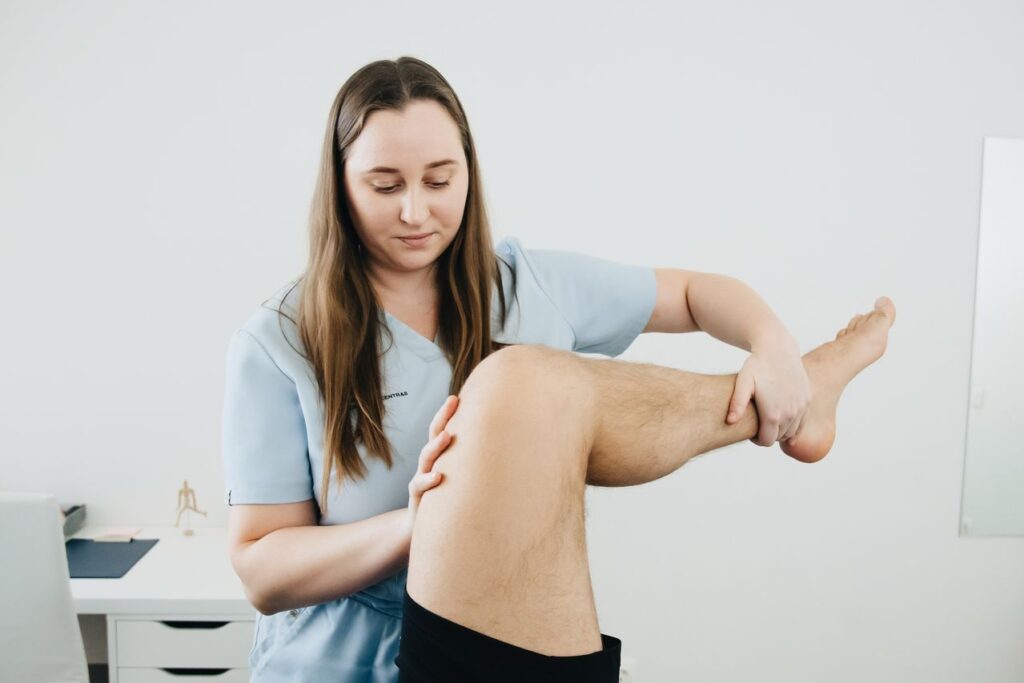
Evidence-Informed Physiotherapy for Workplace Injuries
Physiotherapy is commonly used as part of rehabilitation for musculoskeletal injuries because treatment can address pain, movement, strength, physical function, and the activities that a person needs to perform at work.
The most appropriate treatment depends on the injury and the individual’s functional limitations. For example, rehabilitation for a shoulder injury may focus on restoring movement and strength, while rehabilitation after an ankle injury may place greater emphasis on balance, stability, and progressive loading.
Evidence-informed physiotherapy also means that treatment should be reassessed as the person recovers. Exercises or other interventions that are appropriate early in rehabilitation may need to be progressed or changed as strength, movement, and work-related abilities improve.
For workplace injuries, rehabilitation also has a functional goal. WSIB guidance explains that healthcare professionals provide information about a worker’s injury, impairment, and functional abilities to support recovery and return-to-work planning.
For this reason, a workplace rehabilitation program should be based on the individual’s injury, job demands, recovery progress, and clinical assessment rather than a standard treatment plan applied to every patient.
A Clinician’s Perspective on Workplace Rehabilitation
I’m Branden McKnight, a physiotherapist here at PhysioChiroWellness, and workplace rehabilitation is a significant part of my practice. Over the years, I’ve worked with patients recovering from post-surgical injuries, motor vehicle accidents, and a wide range of workplace conditions, and one thing has stayed consistent: in my experience, workers tend to make better progress when they begin appropriate rehabilitation early and remain engaged with a structured treatment plan.
One part of workplace rehabilitation that I believe deserves particular attention is function. A person may report that their pain has improved while still having difficulty with lifting, reaching, standing, walking, balance, or other tasks required by their job. In those situations, rehabilitation needs to consider what the person can safely do, not only how their symptoms feel. This is especially important when planning a gradual or modified return to work.
I have a particular interest in ankle and balance rehabilitation, which comes up more often than people expect with workplace injuries, especially in roles involving ladders, uneven surfaces, or physical labour. But my approach to any WSIB case is the same regardless of the specific injury. I combine manual therapy, targeted exercise, and patient education to not just reduce pain, but rebuild the strength and confidence someone needs to return to their job safely. For many patients, the goal isn’t just getting back to baseline. It’s getting back to full function, whether that means returning to a physically demanding trade or simply being able to move through a workday without pain holding them back.
How Does the WSIB Physiotherapy Process Work?
If you have been injured at work, the process can seem complicated at first. The exact steps can vary depending on the injury and the circumstances of your claim, but the process generally involves the following.
1. Report the workplace injury
Tell your employer about the injury or illness. WSIB advises workers to report workplace injuries and illnesses and to seek appropriate healthcare.
2. Get appropriate medical attention
A regulated healthcare professional can assess your injury and provide information about your condition, treatment needs, and functional abilities. Physiotherapists are among the healthcare professionals recognized by WSIB for workplace injury care.
3. Submit your WSIB claim
You can submit an injury or illness report to WSIB. WSIB states that workers generally have six months from the date of the injury or illness to claim WSIB supports and services.
4. Choose your healthcare provider
Workers have the right to make an initial choice of health professional, including a physiotherapist. If you are looking for physiotherapy in Newmarket, you can choose a clinic that is appropriate for your needs and provides physiotherapy within the WSIB system.
5. Complete your physiotherapy assessment
Your physiotherapist will assess the injury and develop a treatment plan based on your condition and functional needs. WSIB has specific reporting requirements for physiotherapists treating workplace injuries.
6. Follow your rehabilitation plan
Your treatment may include exercises, manual therapy, education, and functional rehabilitation. Your physiotherapist will monitor your progress and adjust your treatment as needed.
7. Work toward a safe return to work
Returning to work may involve a gradual increase in activity or temporary modifications to your duties. WSIB uses information about a worker’s functional abilities to help assess whether available work is suitable and to support return-to-work planning.
Because WSIB determines entitlement and coverage on individual claims, your treatment plan and the services covered may differ from those of another worker with a similar injury.
FAQ: WSIB Physiotherapy in Newmarket
Do I need a referral to start physiotherapy for a WSIB claim?
In many cases, you can see a physiotherapist without a physician referral. However, WSIB claim and treatment requirements are separate from the general rules about accessing physiotherapy. If you are unsure what documentation or authorization is required for your claim, check with WSIB or your physiotherapy clinic before starting treatment.
Will I have to pay out of pocket for physiotherapy in Newmarket if my WSIB claim is approved?
If your clinic bills WSIB directly and your claim covers physiotherapy, you typically will not need to pay upfront for approved treatment. It is always worth confirming billing arrangements with the clinic before your first visit.
How long does WSIB physiotherapy coverage usually last?
The length of treatment depends on the injury, your recovery, and WSIB’s decisions about your healthcare needs. WSIB’s current policy states that initial physiotherapy treatment is limited to a maximum of 12 weeks. Treatment beyond that period must be pre-authorized by WSIB.
What should I bring to my first physiotherapy appointment for a WSIB injury?
It helps to bring your WSIB claim number if you have one, any medical documentation from your doctor, and a general timeline of how the injury happened and what symptoms you have experienced since.
Can I start physiotherapy before my WSIB claim is approved?
The answer can depend on the circumstances of your claim and the treatment involved. WSIB states that most healthcare treatments require pre-approval. If a claim has not yet been approved, you may need to pay for healthcare and request reimbursement later if the claim is approved. Before beginning treatment, ask the clinic about its WSIB billing process and confirm what WSIB has authorized for your claim.
Book a WSIB Physiotherapy Assessment in Newmarket
If you have been injured at work and are looking for physiotherapy in Newmarket, the team at PhysioChiroWellness can assess your injury and develop a rehabilitation plan based on your condition, functional needs, and recovery goals.
We work with patients recovering from workplace injuries and can help you understand what information and documentation may be needed for your WSIB physiotherapy treatment.
Medical Disclaimer
This article is intended for general educational purposes only and does not constitute medical advice. WSIB claim eligibility and coverage decisions are made individually by WSIB based on the specifics of each case. Please consult with a licensed healthcare provider and, where relevant, your WSIB case manager, regarding your specific injury, treatment plan, and claim status. Information about WSIB coverage and procedures can change. For the most current information about your claim, eligibility, and approved treatment, refer to WSIB or speak with your WSIB case manager.
About the Author
Branden I. McKnight, MSc, Physiotherapist
Branden I. McKnight graduated from Brunel University London with a Master of Science degree in Physiotherapy in 2019. Before completing his degree, he gained clinical experience working with a variety of patients as a Registered Kinesiologist. Branden also received his degree in Human Kinetics from the University of Windsor in 2015. He is interested in athletic rehabilitation, specifically ankle and balance rehabilitation. He has experience working with a variety of injuries and conditions, including vestibular, post-surgical, workplace, and motor vehicle accident injuries. Branden’s goal as a physiotherapist is to rehabilitate and improve general and sport-specific fitness, performance, and quality of life by using education, exercises, manual techniques, and modalities.